

High-Pressure CO₂ – Industrial
Rapid, Powerful Fire Suppression for High-Risk Industrial Hazards
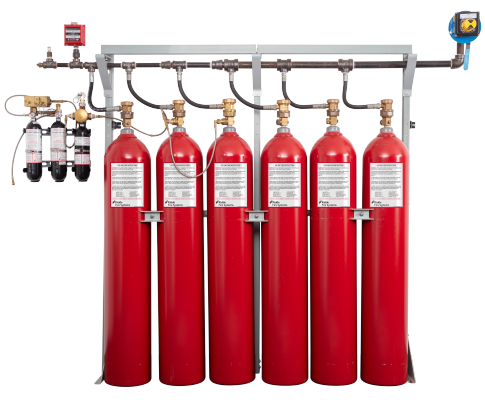
The Kidde Fire Systems High-Pressure (HP) CO₂ Fire Suppression System for industrial applications is engineered to provide fast, effective fire protection for demanding industrial applications involving flammable liquids, vapors, and deep-seated fire hazards.
Designed for challenging environments where rapid suppression is critical, the HP CO₂ system delivers carbon dioxide through a fixed piping network with specially designed discharge nozzles. When activated, the system releases CO₂ in seconds, quickly reducing oxygen levels and absorbing heat to extinguish fire.
Integrated with electric and/or pneumatic detection and control systems, the HP CO₂ Industrial system provides automatic, around-the-clock protection for high-risk operations.
Key Advantages
- Rapid Response – Discharges in Seconds
Designed to suppress fire quickly, reducing the potential for asset damage and operational disruption. - Effective for Surface and Deep-Seated Fires
Provides powerful suppression for a wide range of industrial hazard types. - Damage-Free Suppression
CO₂ is a clean, electrically non-conductive gas that dissipates naturally, minimizing residue and cleanup.
- Design Versatility
Available in three system configurations: Total Flooding, Local Application, Local Hose Line - Engineered for Industrial Applications
Designed specifically for industrial processes where flammable materials and vapors present ongoing risk.
Applications
The High-Pressure CO₂ – Industrial system is ideal for protecting a wide range of industrial hazards, including:
- Flammable liquid storage areas
- Quench and dip tanks
- Large commercial fryers
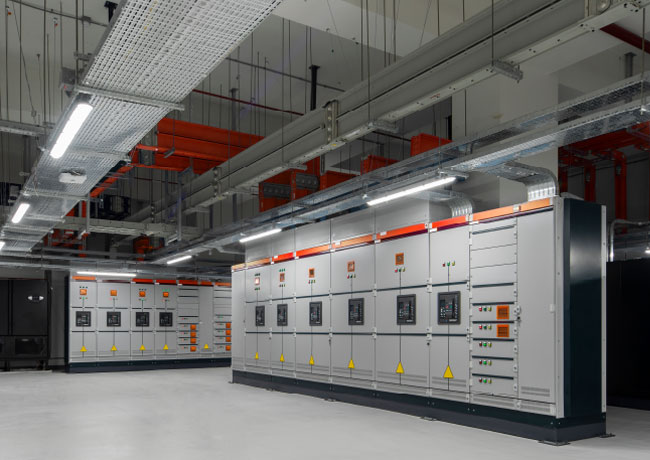
- Engine and electrical rooms
- Spray booths and paint lockers
- Turbine generators
- Printing presses
- Rolling mills
- Dust collectors
- Industrial ovens
- Mixing operations
The system supports both enclosed and partially enclosed hazards and can accommodate environments with continuous air handling processes.
System Architecture
Suppression Method
Carbon dioxide suppresses fire by:
- Absorbing heat from the fire
- Displacing oxygen to a level that will not support combustion
Because CO₂ is heavier than air, it forms a dense blanket over the hazard area during discharge.
System Configurations
The HP CO₂ – Industrial system is available in:
- Total Flooding – Designed for enclosed hazard areas.
- Local Application – Protects specific hazard zones in open areas.
- Local Hose Line – Provides cost-effective protection for targeted fire response.
Detection & Control Integration
- Utilizes electric and/or pneumatic detection units
- Control panel initiates automatic release upon detection
- Integrated with fixed piping network and engineered nozzle design
- Designed for automatic, 24-hour protection
When incorporated into a complete Kidde Fire Systems solution, HP CO₂ systems can operate as part of integrated detection-to-suppression architectures.
Installation & System Design
- Engineered specifically to the hazard and enclosure configuration
- Fixed piping distribution network
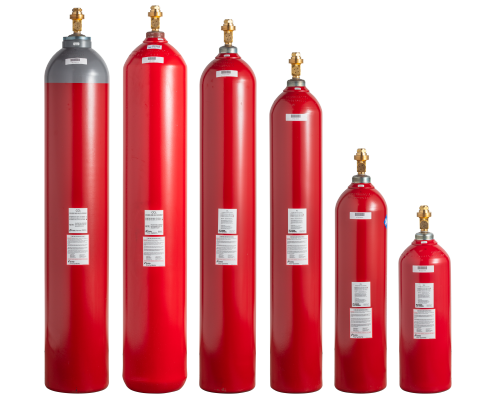
- Cylinders sized and arranged according to hazard requirements
- Designed in accordance with applicable codes and standards
- Supports centralized or distributed protection layouts
Technical Specifications
| PARAMETER | SPECIFICATION |
|---|---|
| System Type | High-Pressure Carbon Dioxide Fire Suppression |
| Suppression Method | Oxygen displacement and heat absorption |
| Discharge | Rapid release in seconds |
| Configurations | Total Flooding, Local Application, Local Hose Line |
| Typical Use | Industrial flammable liquid and vapor hazards |
| Integration | Engineered detection and control systems |
Compliance & Approvals
- UL Listed
- FM Approved
- USCG Approved
- Designed for installation in systems complying with applicable NFPA standards and AHJ requirements
Powerful Suppression. Engineered Reliability.
The High-Pressure CO₂ – Industrial system delivers fast, dependable fire suppression for high-risk industrial environments, providing robust protection where flammable hazards demand rapid response.
