
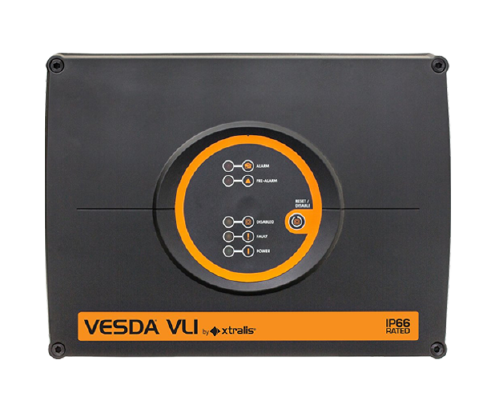
VESDA® Air Sampling Detection Systems
Very Early Warning Smoke Detection for High-Sensitivity Environments
VESDA® Air Sampling Detection Systems, manufactured by Xtralis (a Honeywell company), provide very early warning smoke detection (VESD) for environments where traditional spot-type detectors may not deliver sufficient sensitivity or response speed.
By actively sampling air through a network of pipes and analyzing it using highly sensitive laser detection technology, VESDA ® systems are designed to identify incipient-stage fire conditions before visible smoke or flame is present.
As an authorized distributor of VESDA® products, KiddeFenwal includes the VESDA® offering as part of their Specialty Detection portfolio. VESDA® solutions are available for applications requiring enhanced detection performance, environmental adaptability, and integration with engineered fire protection systems.
What Is Aspirating Smoke Detection?
Unlike conventional detectors that passively sense smoke at a fixed location, aspirating systems:
- Continuously draw air samples through a pipe network
- Transport the air to a centralized detection unit
- Analyze particles using high-sensitivity laser-based technology
- Provide multi-level alarm thresholds for early intervention
This design allows for detection in:
Large open spaces | High-airflow environments
Areas with restricted access | Critical infrastructure spaces
Key Advantages
- Very Early Warning Capability
Detects incipient-stage smoke particles before flame development. - Active Air Sampling
Continuously monitors protected spaces through engineered pipe networks. - Multi-Level Alarm Thresholds
Supports configurable alert stages for investigation and escalation.
- Suitable for Challenging Environments
Designed for high-ceiling, high-airflow, dusty, or temperature-variable conditions. - Centralized Detection Architecture
Allows detectors to be installed in accessible service locations while sampling remote or hard-to-reach areas. - Integration with Fire Alarm & Suppression Systems
Interfaces with KiddeFenwal detection and suppression control platforms
Applications
VESDA® air sampling detection systems are commonly deployed in environments requiring high-sensitivity or mission-critical detection performance:
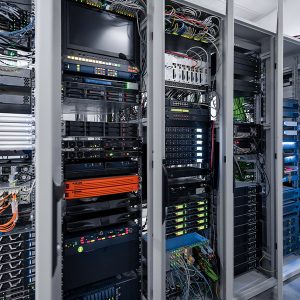
- Data centers and server rooms
- Telecommunications facilities
- Clean rooms
- Control rooms
- Power generation facilities
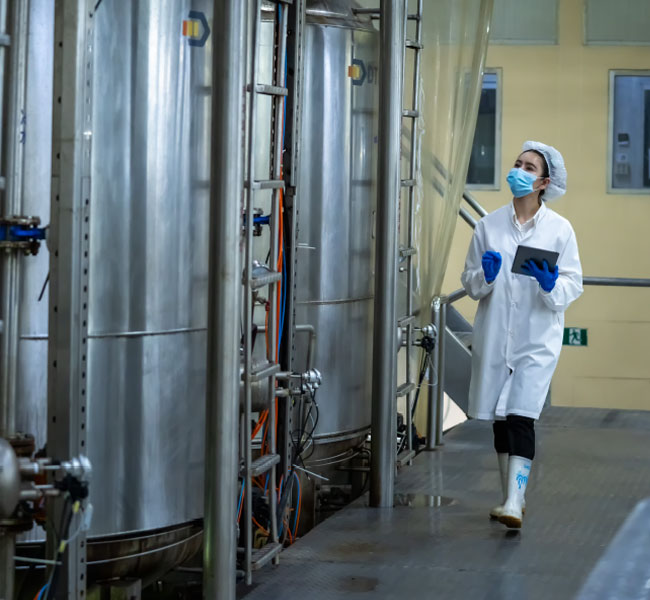
- Industrial processing areas
- Museums and archives
- Transportation hubs
- Warehouses with high ceilings
Certain VESDA® models are also designed for industrial environments with elevated dust or contamination levels.
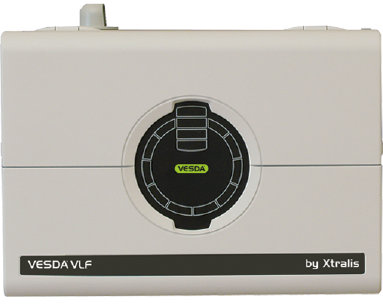
KiddeFenwal currently offers a variety of UL approved VESDA models including the following models:
- VEA
- VEP
- VES
- VEU
- VLF
System Architecture
Installation
A typical VESDA® installation includes:
- Air sampling pipe network
- Sampling ports located within the protected area
- Central detection unit
- Alarm interface
- Optional remote monitoring
- Some configurations may support:
- Zonal detection (VES)
- Addressable integration (VEA)
Integration with KiddeFenwal/Kidde Fire Systems
As part of the Specialty Detection portfolio, VESDA® systems can complement:
- Chemical clean agent suppression systems
- Natura Inert gas suppression systems
- CO₂ systems
- Addressable fire alarm panels
By providing very early detection, VESDA technology can enable faster system response and reduce potential damage in high-value environments.
Manufacturer & Brand Attribution
VESDA® is a registered trademark of Xtralis, a Honeywell company.
KiddeFenwal is an authorized VESDA® distributor and offers VESDA® detection solutions as part of its integrated fire protection portfolio.
When Very Early Detection Matters
In environments where downtime, data loss, or equipment damage can result in significant operational impact, early detection is critical.
VESDA® air sampling detection systems provide enhanced sensitivity and flexible system architecture to help protect critical assets before a fire event escalates.
